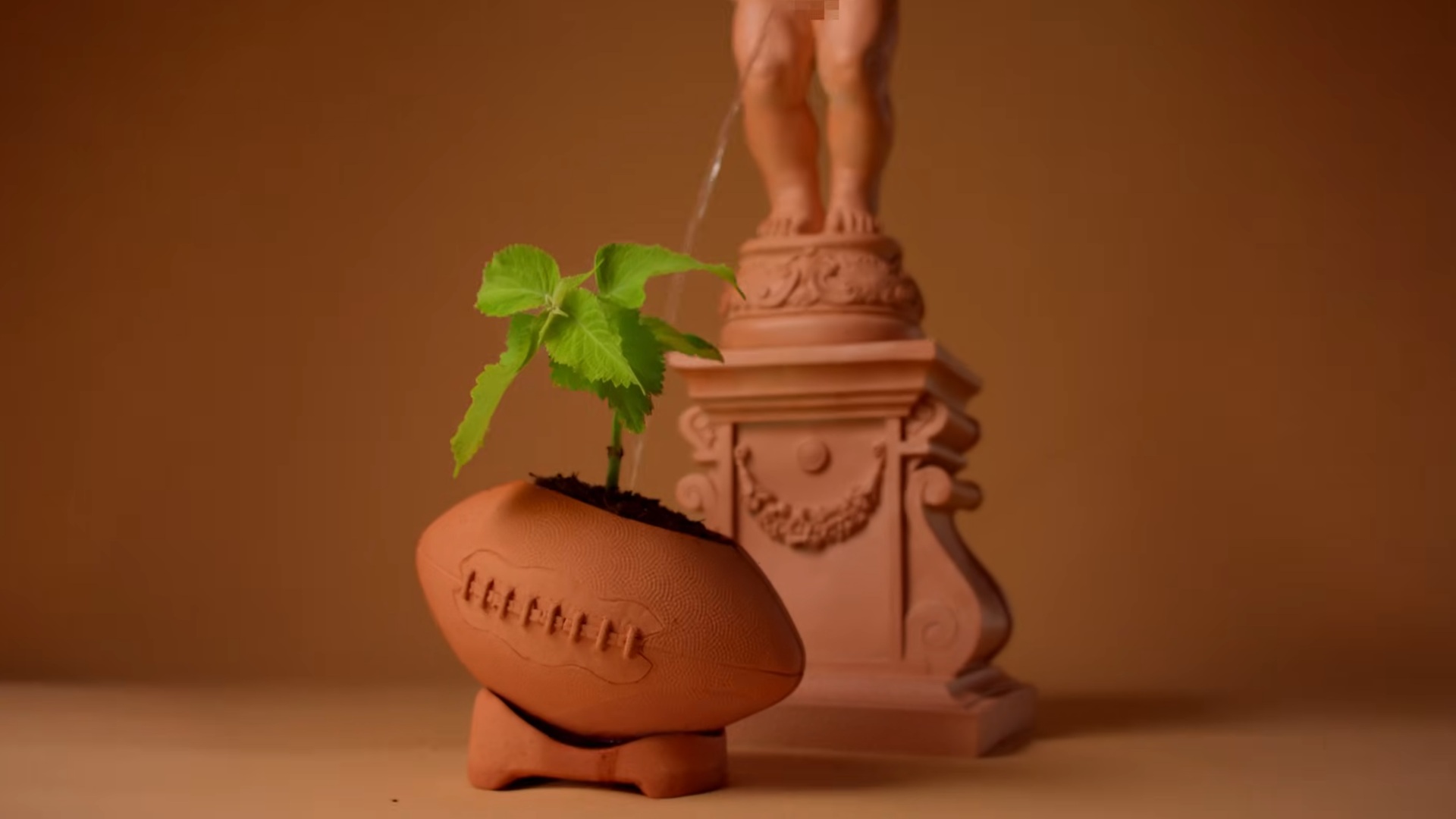
In less than a week, around 213 million U.S. adults will be watching the Big Game this Sunday, with many planning to tune in at a party, bar, or restaurant. But regardless of where they’ll be watching the game, one thing is certain: the halftime is a moment to take a pause. This is a perfect time for football fans to check their social media, refill the snack bowls, or comment on the commercials.
However, it’s also the moment when millions are using the restroom. In fact, so many people use the halftime to go potty that the phenomenon is known as “The Super Flush.” This collective action has even fueled an urban legend, suggesting that the sewer systems risk bursting under the pressure created by the fans flushing simultaneously.
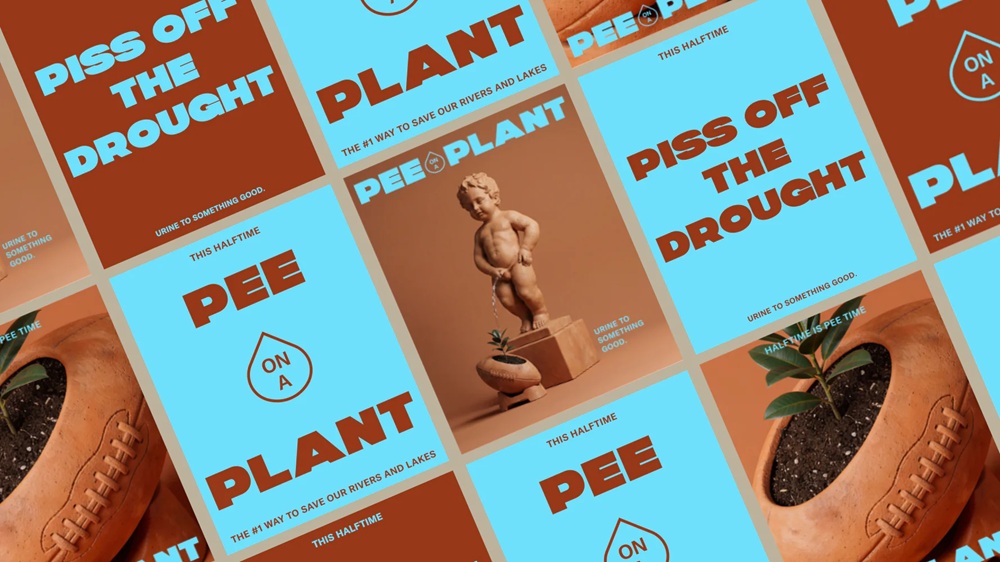
Myth or not, the numbers are real: over 120 million people will use this break to “relieve” themselves, resulting in millions of gallons of water going down the drain. This year, the Rich Earth Institute has a suggestion for the audience to help reduce water waste while also educating them about the nutritional value of human urine. Together with LERMA/ independent agency, the nonprofit is asking football fans to consider “Pee(ing) On a Plant” as an alternative to flushing.
Launching ahead of the Big Game, the initiative blends culture with humor to raise awareness about water scarcity and nutrient pollution. “Pee On a Plant” defines urine as a valuable resource, rich in plant-friendly nutrients such as nitrogen, potassium, and phosphorus. Essential for plant growth, these elements become harmful when entering waterways through conventional sewage systems.
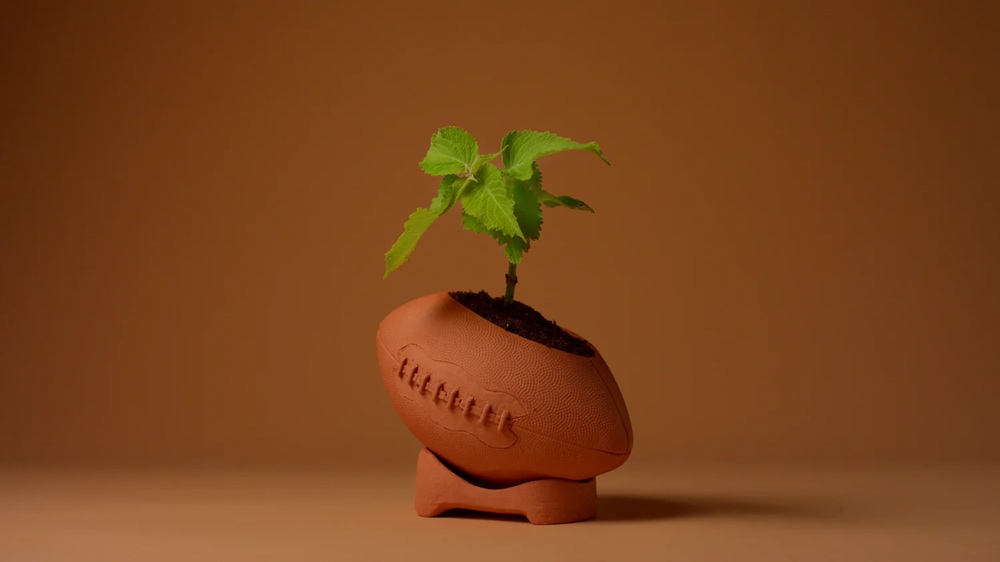
The campaign is supported by a short video, a dedicated online portal, and the Pee Pot — a real, functional product designed for the initiative. Crafted by ceramic artist Adam Knoche of McKinney, Texas, the limited-edition pots will be available for purchase on game day, with all proceeds directed toward Rich Earth Institute and its research.
While we do admire the creativity behind the campaign, the Pee Pot is a marketing stunt created to educate people about water waste and encourage them to adopt more sustainable habits.
CREDITS
Brand: Rich Earth Institute
Agency: LERMA/